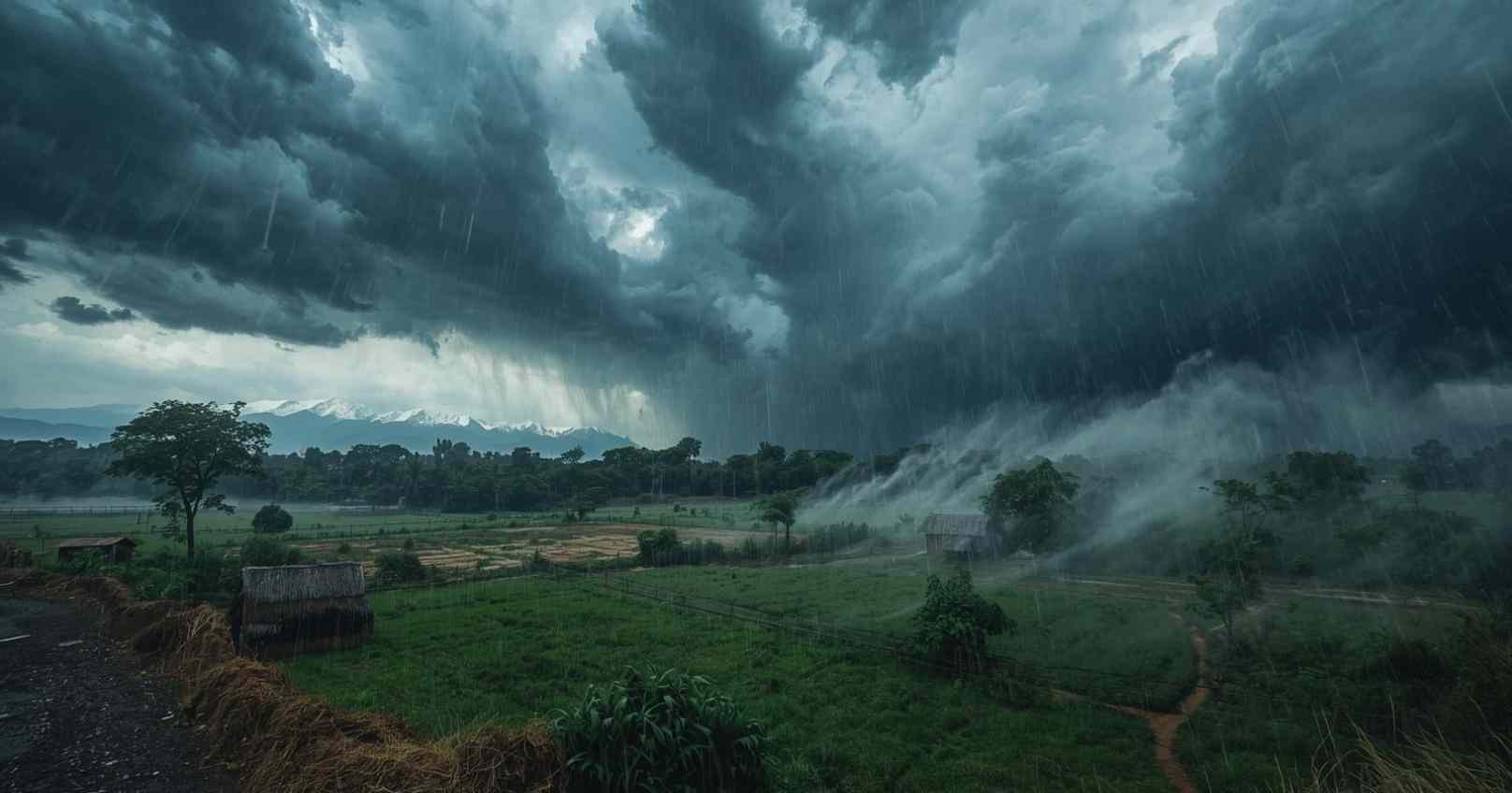
North India is preparing for another spell of turbulent weather as a strong western disturbance is forecast to impact several states in the first week of April 2026. Early signs of the system are expected to appear over the weekend, with scattered showers and thunderstorms developing across the northern plains.
March witnessed frequent atmospheric disturbances and abrupt weather swings, and similar conditions are likely to persist into the first half of April.
What to Expect
The incoming system, originating from higher latitudes, is projected to strengthen as it moves across Northwest India. Its track near the Gujarat–Rajasthan border could intensify weather activity in adjoining regions.
Hill states including Jammu & Kashmir and Ladakh are likely to receive substantial rainfall along with heavy snowfall in higher elevations. In the plains, Punjab and Rajasthan may experience widespread thunderstorms accompanied by strong, gusty winds. Northern Gujarat and interior areas could also see notable weather activity.
Regions on Alert
States such as Haryana, Delhi-NCR, parts of Uttar Pradesh, Himachal Pradesh, and western Madhya Pradesh may witness severe thunderstorms and squally winds. As the system progresses eastward, Odisha and West Bengal could also come under its influence.
Authorities are expected to monitor the situation closely, especially in areas vulnerable to hailstorms, including parts of Punjab, Haryana, and Rajasthan.
Wind speeds during peak activity may range between 50 and 60 kmph, potentially disrupting road travel and outdoor activities. Following the spell of rain and storms, temperatures are likely to drop, temporarily easing heat conditions and delaying the onset of peak summer.
Impact on Agriculture
While the rainfall may improve soil moisture levels and benefit some crops, it also poses risks to standing rabi crops that are nearing harvest. Farmers may need to stay alert for sudden weather changes.
The recurring pattern of unseasonal and intense weather shifts once again underscores the growing unpredictability linked to broader climate trends.