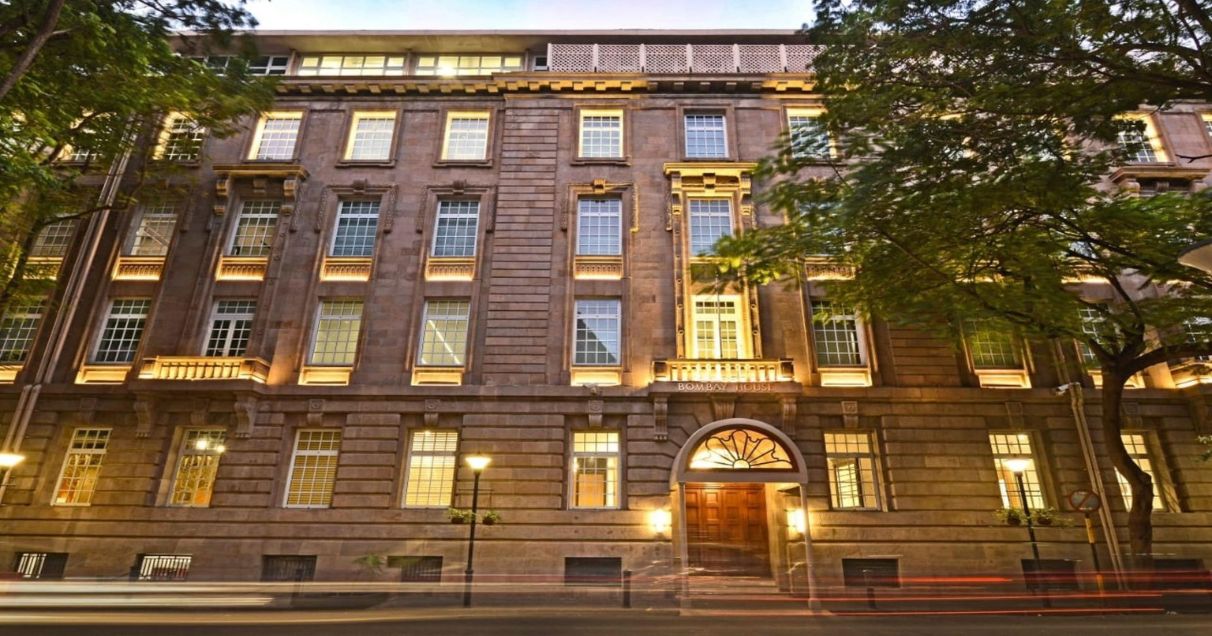
With N. Chandrasekaran’s term as Tata Sons Chairman set to end on February 20, 2027, the question of succession at Bombay House is rapidly becoming one of corporate India’s most consequential leadership debates.
The process has already acquired an unusual complexity. The Sir Dorabji Tata Trust resolved on August 13 to constitute a Selection Committee under the Articles of Association of Tata Sons. The committee recommends the candidate, while the Tata Sons board makes the appointment. At the same time, the Sir Ratan Tata Trust has been barred by the Maharashtra Charity Commissioner from holding board meetings since May, creating a governance complication even as the succession clock runs. But this is not simply about finding another successful CEO.
The next Tata Sons Chairman will sit at the apex of a sprawling group of more than 30 operating companies, while simultaneously managing the relationship with the Tata Trusts, which hold roughly two-thirds of Tata Sons. The person must understand capital allocation across vastly different businesses, large industrial operations, government and regulatory relationships, and perhaps most importantly, the peculiar institutional culture of the Tata Group.
The ideal candidate also needs sufficient runway. An executive between roughly 55 and 60 could potentially serve two terms and oversee Tata’s enormous bets in semiconductors, electronics, aviation and manufacturing through their critical years.
Against that backdrop, here are 10 global executives who could conceivably be considered for Bombay House ~ ranked by their fit rather than the probability that they would actually accept the job.
1. Revathi Advaithi ~ perhaps the strongest fit
At 58, Chennai-born Revathi Advaithi, CEO of Flex, arguably offers the closest match between what Tata is building and what a prospective chairman has actually managed.
Flex is a roughly $27-billion global manufacturer operating across about 30 countries. Advaithi therefore understands complicated manufacturing operations and geopolitically sensitive supply chains, precisely the world into which Tata is pouring enormous capital through Tata Electronics, semiconductor manufacturing at Dholera and iPhone assembly at Hosur.
She has also built Flex’s power, compute and cooling operation into a multi-billion-dollar AI infrastructure business and has experience at Honeywell and Eaton, giving her an industrial background relevant to Tata Motors, Tata Steel and Tata Power.
The question is whether someone accustomed to US-listed corporate governance could adapt to the vastly different ownership and institutional dynamics of Bombay House.
Yet if Tata wants a chairman whose experience corresponds directly with where the group’s next generation of capital is going, Advaithi may be the name worth pursuing hardest.
2. Vimal Kapur ~ the conglomerate specialist
Honeywell Chairman and CEO Vimal Kapur, 60, presents another compelling possibility.
Kapur has spent 37 years at Honeywell and has recently overseen the restructuring of one of the world’s great industrial conglomerates, including the separation of Solstice Advanced Materials and Honeywell Aerospace while executing approximately $14 billion of acquisitions.
Few global CEOs therefore understand both the advantages and burdens of a century-old diversified industrial institution quite as intimately.
The problem is availability. Kapur has been leading Honeywell through a fundamental restructuring and may have little incentive to leave. There is also a philosophical question: his recent experience has demonstrated the value that can come from breaking sprawling conglomerates into more focused businesses. Tata’s identity, by contrast, is inseparable from its extraordinary breadth. He may be exceptionally qualified, and exceptionally difficult to recruit.
3. Laxman Narasimhan ~ the candidate Tata could actually land
Former Starbucks and Reckitt CEO Laxman Narasimhan, 59, could be the most realistic international candidate. His CV crosses consulting, consumer businesses, emerging markets and corporate turnarounds: McKinsey, PepsiCo, Reckitt and Starbucks. He also has meaningful connections with India, including involvement in establishing the National Skills Development Corporation.
Most importantly, unlike several people on this list, Narasimhan is presently available. His short tenure at Starbucks, approximately 17 months, would inevitably be examined closely. The circumstances are particularly interesting for Tata because Starbucks itself was a company operating under the enormous shadow of its founder.
Nevertheless, Narasimhan combines international stature, Indian familiarity, the right age and actual availability. If Tata wants a global candidate it could realistically appoint within months rather than years, he could be the answer.
4. Nikesh Arora ~ the transformational gamble
At 58, Palo Alto Networks Chairman and CEO Nikesh Arora may be the most formidable capital allocator on the list.
His career has taken him from Google to SoftBank to Palo Alto Networks. At Palo Alto he has overseen roughly two dozen acquisitions, culminating in the $25-billion CyberArk transaction, while building the company beyond a $10-billion revenue run-rate.
That combination of operator, investor and acquirer is unusually relevant because Tata Sons itself can ultimately be viewed as a giant capital-allocation institution. But Arora would represent a cultural gamble. His leadership style is fast and performance-driven; Tata traditionally values understated, consensus-oriented and long-horizon leadership.
If the marriage worked, it could be transformational. If it didn’t, Tata would risk reopening institutional wounds it has spent years closing.
5. Shantanu Narayen ~ stature and transformation
Adobe’s outgoing CEO Shantanu Narayen, 63, became a much more realistic possibility after announcing in March 2026 that he would hand over the CEO position once a successor was appointed.
During his 18 years running Adobe, Narayen engineered one of technology’s great business-model transformations: taking Adobe from packaged software licences into cloud-based subscriptions. His understated personality, international standing and familiarity with the Indian government would fit Bombay House unusually well.
Age, however, works against him. At 63, he is more naturally viewed as a one-term transitional chairman than the leader who will run Tata for another decade. There is also a sectoral limitation: his extraordinary operating experience remains overwhelmingly in technology rather than steel, automobiles, aviation or heavy manufacturing.
6. Piyush Gupta ~ the capital disciplinarian
Former DBS CEO Piyush Gupta, now Chairman of Temasek India, offers something different. His 15-year tenure at DBS transformed the Singaporean bank into a regional powerhouse and one of the world’s most celebrated examples of banking digitisation.
More importantly for Tata Sons, Gupta thinks like a portfolio manager: balance-sheet discipline, return on capital and a willingness to redirect capital away from businesses that fail to earn adequate returns. Those qualities could be particularly relevant to Tata Digital and Air India.
But at 66, Gupta would clearly be a bridge chairman rather than a long-duration appointment. His Temasek position could also produce conflicts because of Temasek’s substantial investment activities in India. For a three-to-five-year mandate to impose capital discipline and strengthen governance, however, he could be formidable.
7. Leena Nair ~ understanding the institution
Leena Nair, 57, offers perhaps the most intriguing cultural parallel. As Global CEO of Chanel, she already runs a family-controlled, values-heavy heritage institution where preservation of the brand and the relationship with its owners matter enormously.
Before Chanel came three decades at Unilever. She therefore brings deep experience in people, institutions and multinational corporate culture. The weakness is equally obvious: she has never allocated industrial capital on anything approaching Tata’s scale.
Bombay House today must oversee steel plants, airlines, automobile factories, power businesses, electronics manufacturing and semiconductor fabs. If the committee believes Tata’s central challenge is culture and institutional trust, Nair becomes extremely interesting. If it believes the challenge is industrial capital allocation, others rank ahead.
8. Raj Subramaniam ~ the Air India advantage
FedEx President and CEO Raj Subramaniam, 60, has one enormous advantage: he runs one of the most complicated transportation networks on earth. That includes a huge global air fleet, making his understanding of aviation economics particularly relevant to Tata’s continuing attempt to transform Air India.
He has also led FedEx through network consolidation and the separation of FedEx Freight. His limitation is breadth. Logistics, however vast, remains one principal domain. But if Tata’s selection committee decides Air India and global logistics are among the group’s most urgent challenges, Subramaniam’s candidacy becomes considerably stronger.
9. Arvind Krishna ~ reinventing an institution
IBM Chairman and CEO Arvind Krishna, 63, understands what it means to inherit a famous institution whose past threatens to become heavier than its future.
Under Krishna, IBM spun off Kyndryl, integrated Red Hat and repositioned itself around hybrid cloud and artificial intelligence. IBM’s semiconductor research heritage also gives Krishna unusual technical credibility at a time when Tata is making perhaps the biggest technological-industrial wager in its history at Dholera.
His disadvantages are his age and the fact that his operating career has remained predominantly technology-focused. Still, few candidates understand the problem of modernising a century-old institution quite as well.
10. Ajay Banga ~ the dream candidate
And then there is Ajay Banga. The former Mastercard CEO and current President of the World Bank Group arguably possesses the stature, international network and statecraft demanded by the Tata chairmanship.
He operates comfortably with finance ministers and heads of government, useful for a group whose businesses increasingly intersect with governments through defence, aviation, telecom and semiconductor policy.
He also combines commercial achievement with the institutional sense of purpose that would sit naturally with Tata’s philanthropic ownership structure. But this is essentially the fantasy candidate.
His World Bank term runs until 2028, and leaving it prematurely to take a corporate chairmanship would be extremely unlikely. At 66, age also works against a long tenure.
His inclusion therefore establishes the ceiling against which other candidates can be measured rather than representing a probable appointment.
And there are other names
The wider bench is impressive. Micron’s Sanjay Mehrotra possesses extraordinary semiconductor expertise but, at 68, makes more sense as an adviser or Tata board member. Former Deloitte Global CEO Punit Renjen understands how to run a federation of businesses, although his capital-allocation experience is limited.
Novartis CEO Vasant Narasimhan, at 50, may be too early in his career and comes from a sector in which Tata has little presence. Thomas Kurian, George Kurian and former Cognizant CEO Francisco D’Souza bring enormous technology credentials, while Infosys CEO Salil Parekh bridges international and Indian corporate experience.
ArcelorMittal’s Aditya Mittal would bring the extraordinarily relevant combination of global steel and family-controlled conglomerate experience, but the direct competitive conflict with Tata Steel makes his candidature practically impossible.
The uncomfortable reality: will a global superstar actually take the job?
This is where the succession debate becomes much more complicated. A Tata Sons chairmanship carries enormous prestige. But prestige alone does not recruit a Fortune 100 CEO.
Compensation at Tata Sons can be substantially below what several global corporate leaders can command. More fundamentally, the chairman does not control Tata Sons’ dominant shareholder the Tata Trusts. Any outsider will study the group’s previous governance battles very carefully.
The continuing Trust governance dispute adds another layer of uncertainty. And an outsider entering Bombay House could require years to absorb a corporate culture that Tata insiders have spent decades understanding precisely when enormous investments in Air India, electronics and semiconductors require decisions rather than orientation. That leads to perhaps the most provocative possibility.
Should Tata separate stewardship from management?
Industrialist Harsh Goenka’s suggestion deserves serious examination: separate institutional stewardship from executive management. The Tata Trusts could retain overarching institutional stewardship while Tata Sons appoints a professional chief executive with clearly defined operating powers and boundaries.
Suddenly, executives who might hesitate to become Chairman of Tata Sons could find the proposition considerably more attractive as a clearly defined professional CEO mandate. Advaithi, Narasimhan, Narayen and Gupta are among the names that become more realistically recruitable under such a structure. And that may ultimately expose the central question confronting Bombay House.
Is Tata looking for another custodian, or is it looking for the world’s best professional manager?
Those are not necessarily the same person. If the committee wants one global candidate to pursue aggressively, Revathi Advaithi arguably sits at the top: 58, Indian by formation, global by career, and running precisely the kind of electronics and manufacturing ecosystem into which Tata is investing for the next generation.
If it wants the international candidate it could most realistically recruit quickly, Laxman Narasimhan stands out. But if continuity and an intimate understanding of Tata culture ultimately outweigh the attraction of an international superstar, the global search may lead Bombay House straight back home, with T. V. Narendran and Anish Shah emerging as the more natural shortlist. The global list, therefore, is valuable even if nobody on it eventually gets the job.
It establishes the opportunity cost. It tells Tata precisely what kind of leadership the group could buy from the world, and what it would be choosing to forgo if it stays within the family of familiar insiders.