Diplomatic language is rarely accidental. The words chosen by a senior representative of a major power, particularly on an issue as sensitive and internationally contested as Jammu and Kashmir, carry significance beyond their immediate context. That is why the recent statement of the United States Ambassador to India, Sergio Gor, describing Jammu and Kashmir as “an important part of India”, deserves to be welcomed and carefully understood.
For India, this statement is not about seeking external certification of what we consider an established constitutional and national position. Jammu and Kashmir is an integral part of India, and India’s position on this has remained consistent. The significance of the Ambassador’s remarks lies elsewhere: they reflect an important shift in the manner in which a major global power publicly describes Jammu and Kashmir and the realities prevailing on the ground.
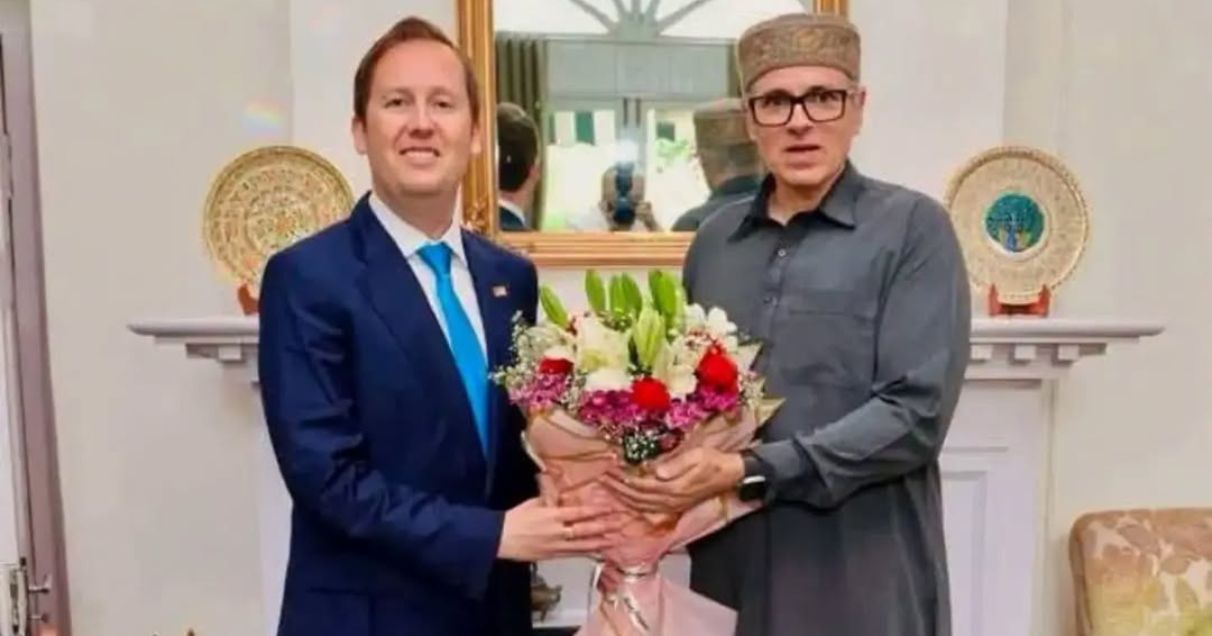
The statement becomes particularly meaningful because it was made during Ambassador Gor’s visit to Kashmir and after his meeting with Chief Minister Omar Abdullah. This was not a statement made in the abstract corridors of diplomacy. It was made after the Ambassador had an opportunity to see the region, engage with its political leadership and assess the prevailing environment. His observation that Jammu and Kashmir is an important part of India consequently acquires greater political and diplomatic weight.
For decades, Kashmir has been the subject of competing narratives. Pakistan has consistently attempted to internationalise the issue and present Jammu and Kashmir primarily as an unresolved international dispute. India has maintained that the issue is fundamentally connected with its sovereignty, territorial integrity and constitutional order, while differences with Pakistan have to be addressed through peaceful and appropriate bilateral mechanisms.
The reaction from Pakistan to the American Ambassador’s statement is itself revealing. Islamabad’s decision to lodge a diplomatic protest demonstrates that the words were not dismissed as inconsequential. Pakistan clearly understands that language matters in international diplomacy. A formulation that places Jammu and Kashmir within the framework of India directly challenges the narrative that Pakistan has sought to sustain internationally for decades.
Yet India must also approach the statement with diplomatic maturity. One ambassadorial statement should neither be exaggerated into a dramatic transformation of American foreign policy nor dismissed as merely routine diplomacy. The United States, like every major power, conducts its foreign policy according to its own strategic interests. India’s relationship with Washington is broad and consequential, and Kashmir is only one element within a much larger strategic partnership.
The importance of the statement, therefore, lies in the direction of the discourse.
The world is increasingly looking at Jammu and Kashmir through the prism of contemporary realities. Since the constitutional changes of August 2019, the region has undergone a profound political and administrative transformation. The subsequent restoration of an elected government has added an important democratic dimension to the process. The challenge before India now is to consolidate peace with democracy, development, accountability and public confidence.
That is where the Ambassador’s observations regarding the security environment become particularly relevant.
For too long, the international image of Kashmir has been disproportionately shaped by terrorism, violence and instability. If the security situation has improved sufficiently for major countries to reconsider their travel advisories, that is a development that India should welcome. A more favourable international perception can have consequences far beyond tourism. It can encourage investment, strengthen economic activity, facilitate people-to-people contacts and allow Kashmir to be seen for what it also is—a land of immense human, cultural and economic potential.
But peace cannot be measured merely by the decline in violence.
The real test of a transformed Kashmir is whether peace produces dignity, democratic participation, economic opportunity and reconciliation. A secure Kashmir must also become a confident Kashmir. Young people must see a future in their homeland. Institutions must command public trust. Political differences must find democratic expression. And the people of Jammu, Kashmir and Ladakh must feel that their respective identities and aspirations have a legitimate place within India’s constitutional framework.
This brings me to an issue that cannot be ignored in any serious discussion about the future of Kashmir—the plight of the displaced Kashmiri Pandit community.
The story of Kashmir cannot be considered complete while a historic community remains substantially displaced from its ancestral homeland. The return of Kashmiri Pandits should not be treated merely as a rehabilitation package or a matter of financial assistance. It is a question of justice, dignity, citizenship and restoration of a civilisational bond.
India needs a comprehensive and time-bound return module for the displaced community—one that guarantees security, protects property and cultural heritage, creates economic opportunities and enables families to return voluntarily and with dignity. The objective should not merely be physical relocation but genuine reintegration into the social and civic life of Kashmir.
Such a return would also send a powerful message to the world. It would demonstrate that India’s vision for Kashmir is not simply one of territorial integration but of social reconciliation and restoration of pluralism.
The Ambassador’s statement also needs to be viewed against the larger India-US strategic relationship. The two countries today cooperate across defence, counter-terrorism, technology, critical and emerging technologies, energy, trade, the Indo-Pacific and global governance. In this larger partnership, India’s concerns regarding cross-border terrorism and regional stability naturally assume importance.
India should use this moment to explain Kashmir to the world with confidence rather than defensiveness. The international community should be encouraged to see Jammu and Kashmir not merely as a security theatre or a diplomatic dispute, but as a living democracy undergoing a process of political, economic and social renewal.
At the same time, India’s position should remain clear: international engagement is welcome, but external mediation is neither necessary nor acceptable. Jammu and Kashmir’s future must be shaped by the democratic and constitutional processes of India and by the aspirations of its people. Constructive international interest should facilitate peace, development and people-to-people engagement—not reopen questions that India considers settled within its constitutional framework.
There is also a message here for Pakistan. The international environment is changing. Attempts to keep Kashmir permanently on the global diplomatic agenda through confrontation and proxy violence are unlikely to provide a sustainable path forward. If Pakistan genuinely wants peace and prosperity in South Asia, it must move away from terrorism and confrontation and towards responsible engagement.
The United States, too, has a role to play—not as an arbiter of Kashmir, but as a partner in promoting stability, countering terrorism and encouraging economic and people-to-people engagement in the region. A stable and peaceful Jammu and Kashmir serves not only India’s interests but the broader interests of South Asian peace.
For me, therefore, the most important aspect of Ambassador Gor’s statement is not the diplomatic phrase itself. It is the possibility of a larger change in perception. Kashmir should increasingly be understood in terms of its present realities rather than exclusively through the narratives of the past.
But diplomacy alone cannot transform Kashmir. Statements by foreign ambassadors cannot substitute for good governance, democratic institutions, economic opportunity or reconciliation. Ultimately, India’s strongest argument in Kashmir will not be made in diplomatic capitals. It will be made on the ground—in the confidence of its people, in the return of those who were forced into exile, in the opportunities available to its youth and in the restoration of the region’s pluralistic social fabric.
The American Ambassador’s words are important because they indicate that the world is watching these changes. India should welcome that attention, but also recognise the responsibility that comes with it.
The task before us is to ensure that Kashmir becomes not merely a symbol of territorial integration, but a living example of constitutional democracy, pluralism, reconciliation and peace.
That is the real measure by which India’s Kashmir story will ultimately be judged.
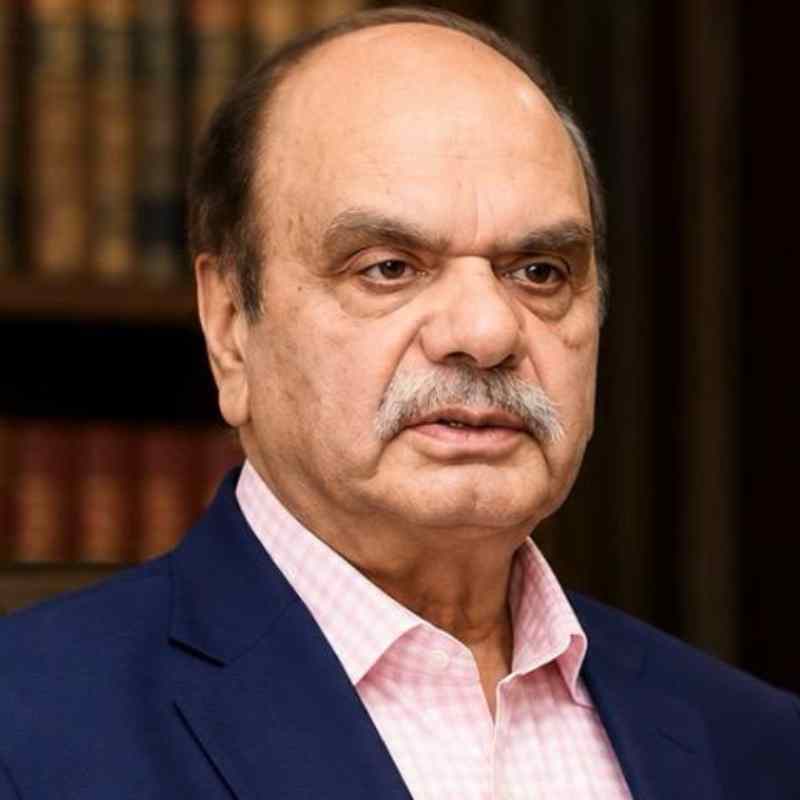
- Author is a Geo Political analyst and a Senior Advocate Supreme Court of India