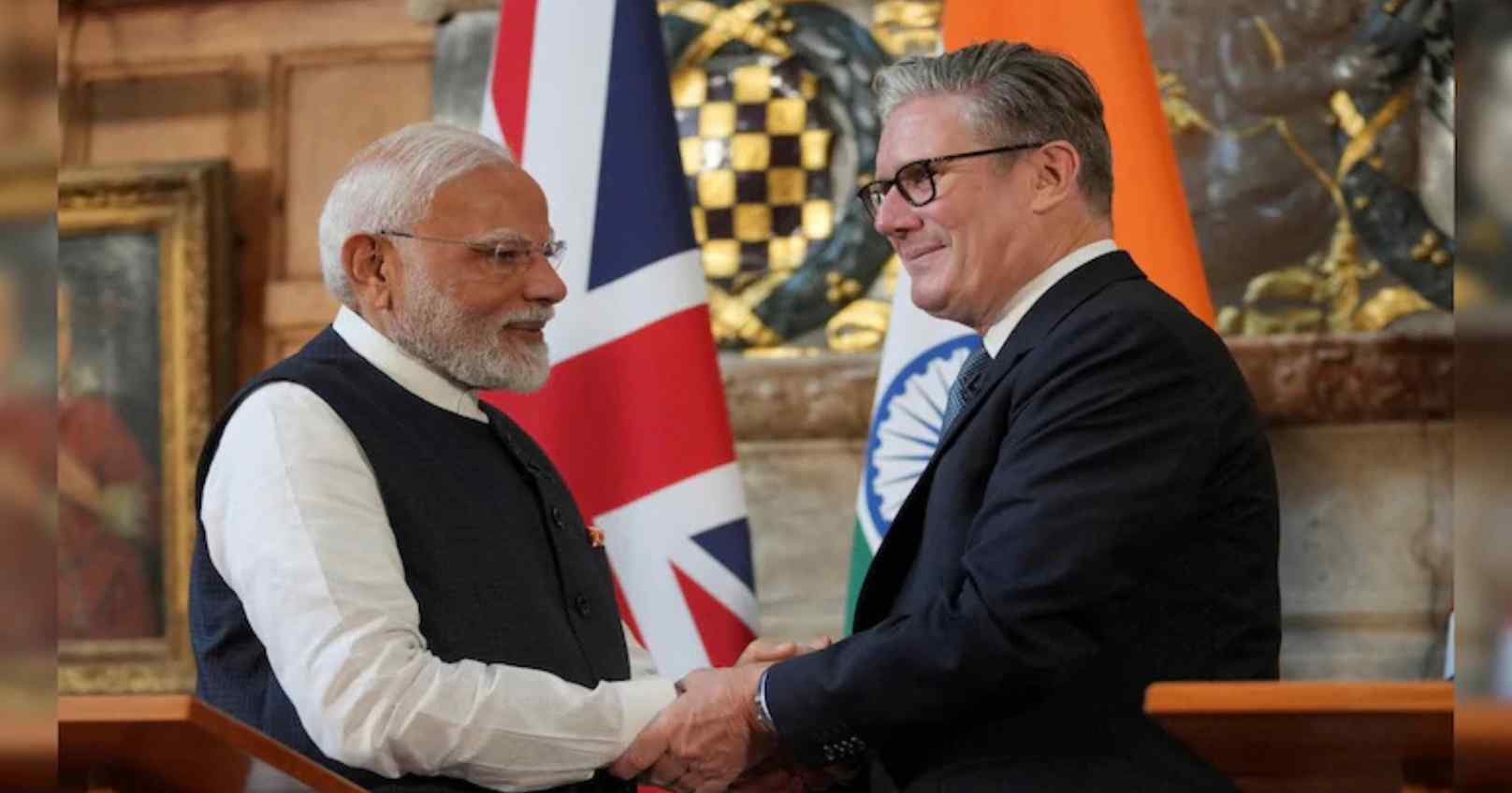
India and the United Kingdom have signed a groundbreaking Free Trade Agreement (FTA) in London, during Prime Minister Narendra Modi’s official visit, setting the stage for a dramatic rise in bilateral trade valued at nearly $34 billion annually. Representing both nations were Commerce Minister Piyush Goyal and UK Business Secretary Jonathan Reynolds.
This FTA is India’s most significant trade pact in over ten years and marks the UK’s first major agreement since Brexit. Both leaders hailed the development as a pivotal advancement in their economic engagement.
Describing the agreement as a “shared roadmap for prosperity,” PM Modi noted its wide-ranging impact across various sectors—from agriculture and small enterprises to services and manufacturing. With the deal in place, Indian products such as textiles, gems, processed food, engineering goods, leather items, and seafood will enjoy almost zero-duty access in the UK market.
Lower Tariffs, Bigger Opportunities
On the flip side, UK exporters will benefit from sharply reduced import duties in India on items like chocolates, cars, whisky, cosmetics, aerospace components, and medical devices. Tariffs on many British goods are set to drop from an average of 15% to roughly 3%, opening the Indian market to more competitive pricing.
Agneshwar Sen, Trade Policy Head at EY India, described the agreement as transformative, noting that it will eliminate most trade barriers and help fuel job growth, particularly in sectors like apparel, engineering, and chemicals. He also emphasized the deal’s impact on the services sector, highlighting relaxed visa regulations and an important social security clause.
“The average consumer in both countries will benefit through better pricing and more choices,” Sen said. “This isn’t just about goods and services—it’s about forward-looking cooperation between two innovation-driven economies.”
The leather sector anticipates gaining 5% of the UK market within two years, while exports in electronics and engineering are projected to double by 2030. Chemical exports may surge by 40% next year, and software services could witness a 20% year-on-year growth.
Big Win for Indian Talent
The agreement also brings considerable advantages to Indian professionals, with 35 service sectors opening up for Indian workers to operate in the UK for up to two years without needing to set up local offices.
This move is expected to benefit independent contractors, chefs, musicians, yoga experts, and tech professionals. Industry sources estimate that over 60,000 Indian IT workers annually—especially from top firms like Infosys, Wipro, HCL Technologies, TCS, and Tech Mahindra—could find new opportunities in the UK.
A crucial provision waives the need for short-term Indian employees to pay into the UK’s social security system for assignments up to three years. Puneet Gupta, a partner at EY India’s People Advisory Services, explained that this will reduce both compliance complexity and financial strain for employers and employees alike.
“This will help professionals maintain continuity in their social security contributions in India while on international postings, making overseas roles more attractive and sustainable,” Gupta added.
What Britain Gets in Return
From Britain’s standpoint, the FTA means about 90% of its exports to India will see reduced tariffs, with 85% becoming completely duty-free over a decade. British firms will also gain access to Indian public procurement opportunities, allowing them to compete for government contracts worth over ₹2,000 crore annually—about 40,000 tenders.
UK authorities estimate this could generate over 2,000 jobs and inject an additional £2.2 billion in wages into the British economy. New chapters in the deal also address financial services and intellectual property rights. British financial firms will now enjoy equal standing with Indian entities.
Concerns over potential impacts on India’s production of affordable generic medicines have been addressed, with commitments ensuring continued access to essential drugs.
British Prime Minister Keir Starmer welcomed the deal, saying it would boost investment, create thousands of jobs, and strengthen the UK’s economic footprint globally. As part of the wider commercial collaboration, 26 UK firms are planning to expand into India, while Indian companies have pledged nearly £6 billion in new UK investments.