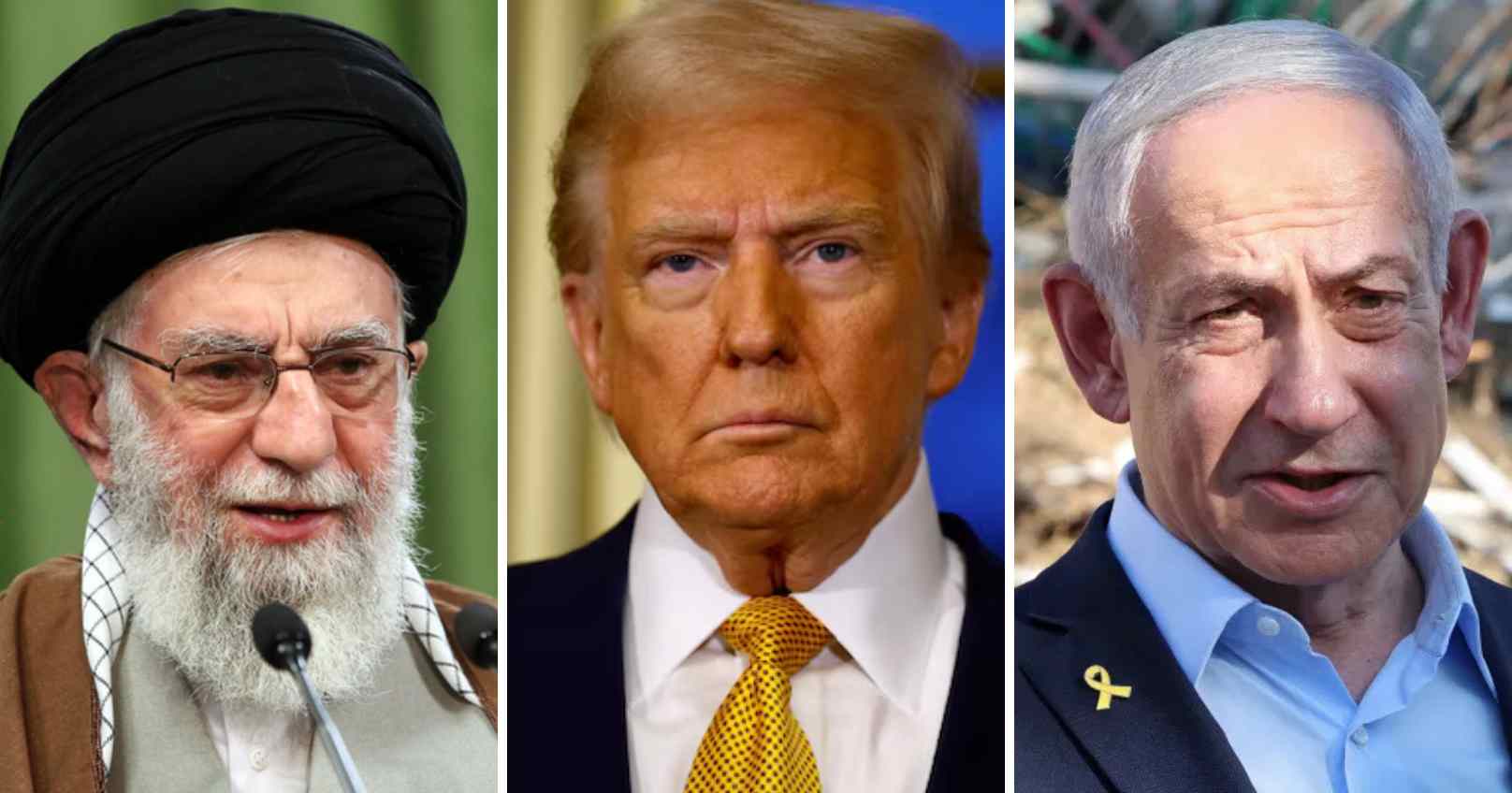
Iranian Foreign Minister Abbas Araghchi on Saturday denounced U.S. President Donald Trump for making what he called "unacceptable" and "insulting" remarks about Iran’s Supreme Leader Ayatollah Ali Khamenei, amid growing tensions between the two nations.
Taking to social media platform X, Araghchi said that if President Trump is truly interested in pursuing diplomacy, he must change his approach.
“If President Trump is serious about reaching an agreement, he should drop the offensive rhetoric against our Supreme Leader, Grand Ayatollah Khamenei, and stop antagonizing the millions who support him,” Araghchi wrote.
Referring to Iran's recent missile strikes and the broader conflict with Israel, the foreign minister added, “The Iranian people, who proved that the Zionist regime had no option but to seek protection from the United States, will not tolerate threats and insults.”
His remarks came after President Trump claimed on his Truth Social platform that he had personally ensured Khamenei’s survival, suggesting he had prevented Israeli or American forces from assassinating the Iranian leader.
“I knew exactly where he was located and chose not to authorize Israel or the U.S. military — the most powerful force on Earth — to eliminate him,” Trump wrote. “I SAVED HIM FROM A HORRIBLE AND HUMILIATING DEATH, and he doesn’t even say ‘Thank you, President Trump!’”
Trump also stated that he had been working toward lifting certain sanctions on Iran — a long-standing demand by Tehran — but abandoned those efforts after Iran issued a scathing response to his claims.
“I was preparing to ease sanctions, but after their statement full of rage and hatred, I immediately stopped that process,” Trump said, urging Iran to resume negotiations.
Iran, however, has rejected suggestions that nuclear talks with the United States are set to resume, directly contradicting Trump’s assertion that talks could restart as early as next week.
The diplomatic clash comes in the wake of U.S. airstrikes on three Iranian nuclear-related sites last weekend, which followed Israel's ongoing campaign targeting Iran’s nuclear infrastructure. The 12-day conflict began on June 13 and has led to heightened concerns over regional stability.
While the effectiveness of the recent U.S. strikes remains debated among analysts, what is clear is that diplomatic relations between Tehran and Washington are once again at a boiling point.