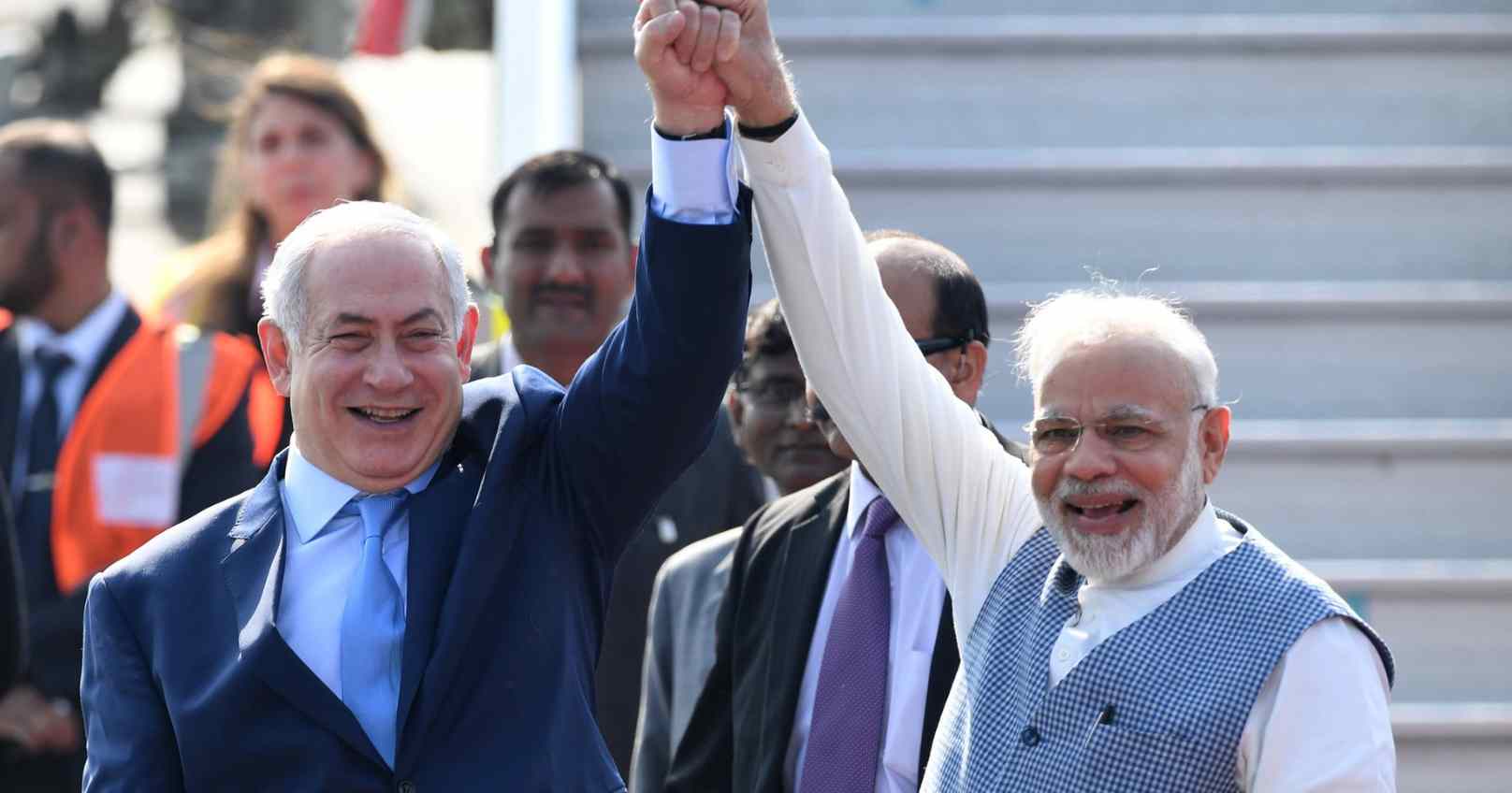
In a significant diplomatic signal just days before Prime Minister Narendra Modi’s scheduled visit to Israel, Israeli Prime Minister Benjamin Netanyahu has introduced a new regional framework he describes as a “hexagon” of partnerships — a proposed strategic coalition aimed at reshaping the balance of power across West Asia and beyond.
Speaking at a cabinet meeting in Jerusalem on February 22, Netanyahu laid out his vision of a structured alliance network connecting Israel with India, Greece, Cyprus, select Arab nations, African partners, and additional Asian countries whose names were not publicly disclosed. According to an official statement from Israel’s foreign office, the framework is intended to unite nations that share similar security concerns and geopolitical objectives.
A Strategic Counterweight
Netanyahu presented the initiative as a coordinated response to what he characterised as expanding “radical axes” in the region. He referred specifically to two evolving power alignments — one led by Iran and its allied groups, and another emerging Sunni extremist configuration. Without naming every actor directly, the remarks were widely interpreted as referencing Tehran and its proxy networks on one side, and extremist movements with cross-border reach on the other.
The proposed bloc, Netanyahu indicated, would prioritise deeper intelligence cooperation, defence coordination, and broader strategic collaboration among like-minded states. The structure signals a move beyond informal partnerships toward a more clearly articulated security architecture.
Timing Amid Regional Flux
The proposal arrives against a backdrop of shifting alliances in West and South Asia. Analysts have pointed to the Saudi–Pakistan Strategic Mutual Defence Agreement signed in September 2025 — often likened to a NATO-style pact — as a key development influencing regional calculations. Turkey’s reported interest in aligning with that arrangement has further underscored the fluidity of the current geopolitical landscape.
In this context, Netanyahu’s “hexagon” proposal appears designed to consolidate partnerships among countries that share concerns over security instability and ideological extremism.
India’s Central Role
India’s inclusion as a core partner is particularly noteworthy. Prime Minister Modi is set to undertake a State visit to Israel on February 25–26 at Netanyahu’s invitation, marking his second official trip to the country. According to India’s Ministry of External Affairs, the visit will include discussions on regional and global developments of shared interest.
India already maintains close ties with Israel, Greece, and several Gulf nations through economic, technological, and security cooperation. Platforms such as the Abraham Accords framework and the I2U2 grouping have strengthened multilateral engagement in recent years. However, no formal collective security structure currently binds these countries together.
By publicly outlining the “hexagon” concept, Netanyahu has elevated what had previously been seen as overlapping strategic partnerships into a potential organised alliance system.
Beyond Bilateralism
Observers suggest that the proposal represents an attempt to institutionalise an emerging strategic alignment rather than simply expand existing bilateral ties. The inclusion of Mediterranean partners Greece and Cyprus reflects Israel’s expanding footprint in the eastern Mediterranean, particularly in energy and maritime cooperation. Meanwhile, outreach to African and Asian states hints at a broader geopolitical canvas extending well beyond West Asia.
Whether the proposal evolves into a formal pact or remains a diplomatic framework will depend on consultations during Modi’s upcoming visit and subsequent multilateral discussions.
For now, Netanyahu’s articulation of a six-nation-plus structure signals Israel’s intent to anchor itself within a wider coalition designed to navigate — and counter — the region’s rapidly shifting power equations.