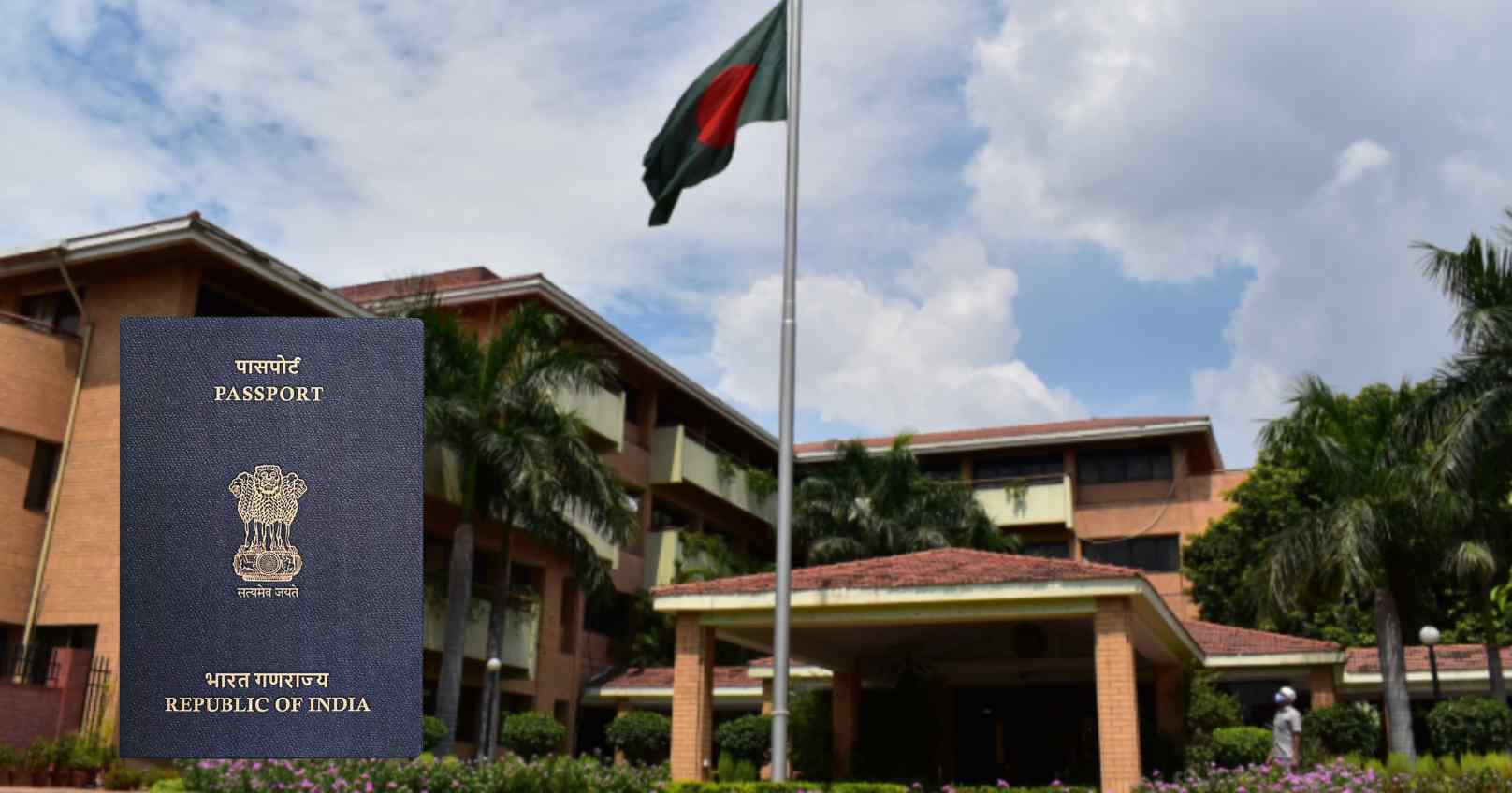
Relations between India and Bangladesh have taken a further hit after the Bangladesh High Commission in New Delhi announced a temporary suspension of all consular and visa-related services. The move comes in response to India halting visa operations in Bangladesh’s Chattogram, amid growing unrest triggered by the death of influential youth figure Sharif Osman Hadi.
In an official notice, the Bangladesh mission cited “unavoidable circumstances” for pausing services until further notice, expressing regret for any inconvenience caused to applicants. The decision follows India’s earlier step to shut down visa services at the Indian Visa Application Centre (IVAC) in Chattogram, a key port city, after security concerns arose in the wake of violent protests.
Indian authorities had flagged safety risks after demonstrators gathered outside the Assistant High Commission of India in Chattogram, issuing threats and warning of possible violence at Indian diplomatic facilities. Similar warnings were reportedly made regarding visa centres in Rajshahi, prompting India to act pre-emptively.
The unrest erupted after the death of Sharif Osman Hadi, a prominent youth leader and a central figure in last year’s movement that led to the removal of former Prime Minister Sheikh Hasina. His killing sparked widespread protests, further straining an already fragile political climate in Bangladesh.
Meanwhile, concerns over the situation were also echoed in India’s Parliament. The Parliamentary Standing Committee on External Affairs, led by Congress MP Shashi Tharoor, recently described the unfolding crisis in Bangladesh as one of India’s most serious strategic challenges since the 1971 Liberation War.
In its report tabled in Parliament, the committee highlighted deeper worries beyond immediate unrest, pointing to shifting political dynamics, generational alienation, and increasing external influence from countries such as China and Pakistan. It warned that while the 1971 crisis was overt and humanitarian in nature, the current situation poses a more complex and long-term strategic risk for India’s neighbourhood.