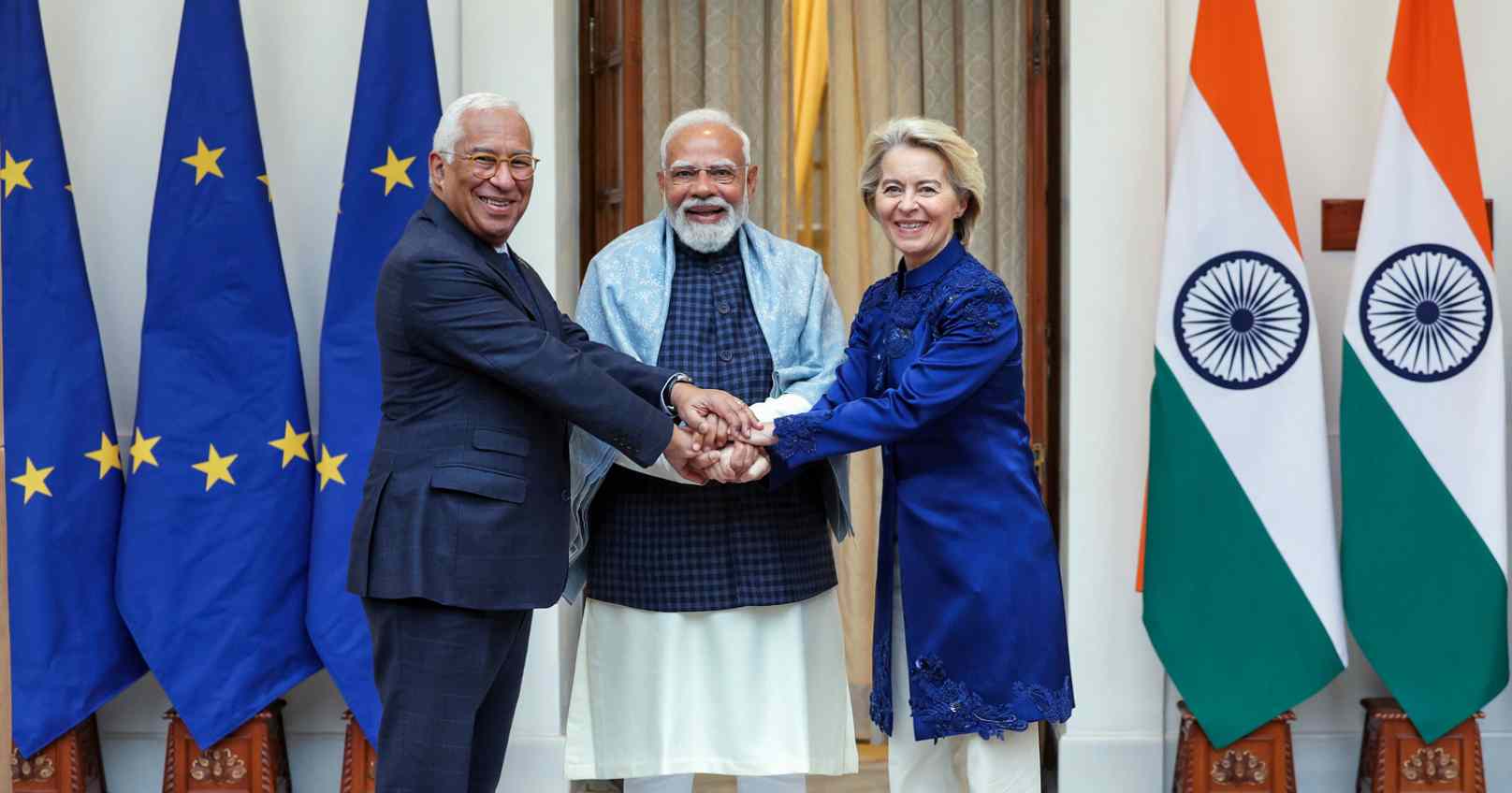
The long-awaited Free Trade Agreement (FTA) between India and the European Union, finalised after 18 years of negotiations, is set to significantly reshape trade flows and consumer markets on both sides. Often described by EU leaders as a landmark accord, the deal aims to deepen economic ties by lowering tariffs, easing market access and expanding cooperation across multiple sectors.
For Indian consumers, the most visible impact will be a sharp reduction in the prices of high-end European products. Luxury automobiles from brands such as Mercedes-Benz, BMW and Audi are expected to become far more affordable. At present, imported cars face duties exceeding 100 per cent. Under the new agreement, vehicles priced above 15,000 euros (around ₹16 lakh) will initially attract a 40 per cent duty, which will be progressively lowered to 10 per cent over time. This phased reduction is expected to bring down prices by several lakh rupees.
To safeguard India’s domestic automobile industry, the duty relaxations will be governed by quota limits. According to officials, the EU has shown limited interest in exporting lower-priced cars that dominate India’s mass market. Vehicles likely to retail below ₹25 lakh will not be exported directly but may instead be manufactured locally in India.
Alcoholic beverages from Europe will also see a major price correction. Import duties on wines from countries such as France, Italy and Spain, currently as high as 150 per cent, will be gradually reduced to about 20 per cent over a period of five to ten years. Premium spirits like cognac, high-end gins and vodkas are also expected to become cheaper. However, wines priced under 2.5 euros will remain protected from duty cuts to shield domestic producers. Indian wine exports, in return, will gain improved access to European markets.
Healthcare is another sector poised for transformation. The agreement will lower the cost of importing advanced medicines for cancer and other critical illnesses, along with sophisticated medical equipment from Europe. At the same time, Indian pharmaceutical products will gain easier entry into all 27 EU member states.
The pact also eliminates tariffs on aircraft components, mobile phone parts and advanced electronic machinery. This move is expected to reduce manufacturing costs in India, potentially leading to more affordable gadgets for consumers. Additionally, proposals for zero-duty trade in iron, steel and chemical products could lower input costs for construction and manufacturing, indirectly benefiting homebuyers and industrial users.
On the export front, Indian industries such as textiles, garments, leather goods and jewellery stand to gain from expanded access to the European market. Overall, the India–EU FTA marks a significant step toward closer economic integration, with wide-ranging benefits for businesses and consumers alike.