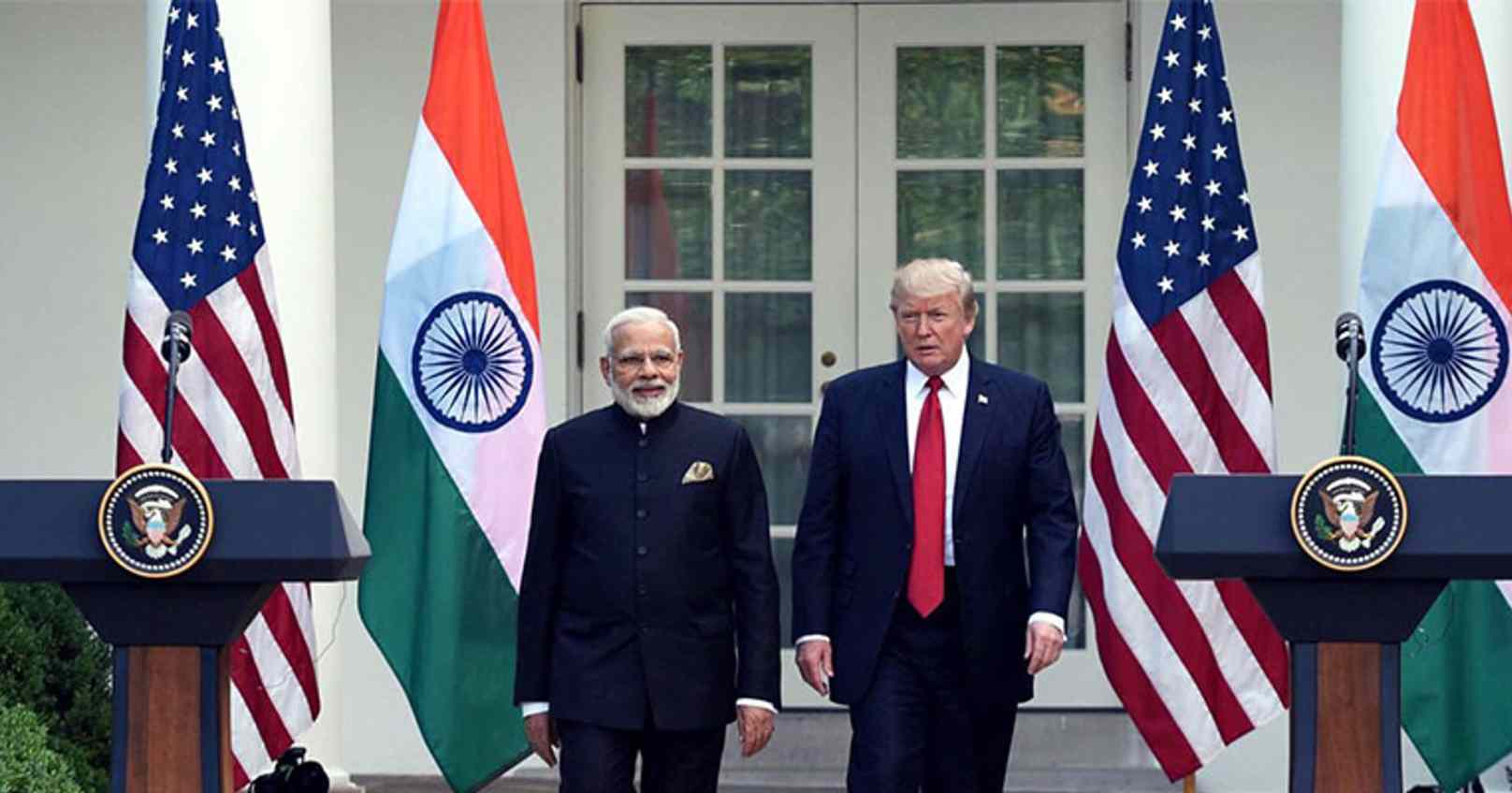
India and the United States have reached a significant interim trade understanding that sets the stage for a broader Bilateral Trade Agreement in the future. Even before a full pact is finalised, this framework delivers immediate advantages for Indian businesses and strengthens economic cooperation between the two nations.
The agreement eases trade barriers, cuts steep US import duties on Indian goods, expands market access, and positions India more firmly in evolving global supply chains. Union Commerce and Industry Minister Piyush Goyal described the deal as a major milestone that unlocks access to a market valued at nearly USD 30 trillion, with strong job creation potential across MSMEs, agriculture, and youth-driven industries.
Sharp Drop in US Tariffs on Indian Goods
One of the biggest gains is the steep reduction in US reciprocal tariffs on Indian exports — slashed from around 50% to approximately 18%. This change significantly improves the competitiveness of Indian products in the American market.
Industries such as textiles, garments, leather goods, footwear, home décor, organic chemicals, handicrafts, and plastics stand to benefit immediately. Lower duties make Indian products more attractive to US buyers, giving exporters a stronger foothold in the world’s largest consumer economy.
Zero-Duty Access for High-Value Export Sectors
Under the next phase of the framework, the US will remove tariffs entirely on select Indian export categories, including generic pharmaceuticals, gems and diamonds, and aircraft components.
These industries already play a major role in India’s global trade presence. Duty-free access could further accelerate export growth, boost domestic manufacturing clusters, and reinforce the “Make in India” initiative.
Support for India’s Manufacturing Push
India, in return, has agreed to lower or eliminate duties on several American industrial and agricultural products. While this opens the Indian market further, it also supports domestic manufacturing by reducing costs on critical imports such as machinery, aviation equipment, medical technology, energy systems, and semiconductor-related components.
The deal also includes commitments to resolve long-standing regulatory challenges in sectors like medical devices, ICT products, and agricultural goods. Within six months of implementation, India is expected to clarify accepted technical standards, improving transparency and business predictability.
Boost for Technology, AI and Supply Chains
The framework strengthens cooperation in high-tech areas, including artificial intelligence hardware, cloud infrastructure, GPUs, semiconductors, and export-control coordination.
This signals deeper strategic alignment between India and the US, positioning India as a key partner in global technology supply chains as companies seek alternatives to concentrated manufacturing regions.
Simpler Rules and Faster Trade Processes
Beyond tariff cuts, the agreement aims to reduce red tape. Both nations will work toward aligning testing protocols, certification systems, and compliance requirements in key industries.
For exporters and manufacturers, this means quicker approvals, fewer regulatory delays, and smoother cross-border trade — improvements that can make a major difference in long-term business growth.
Agriculture and Dairy Remain Shielded
Sensitive domestic sectors such as dairy, poultry, rice, wheat, maize, and select vegetables have been kept out of tariff concessions. This ensures that Indian farmers and rural livelihoods remain protected from import-driven disruptions.
What Comes Next
The interim framework serves as the foundation for a full-fledged India–US Bilateral Trade Agreement expected in the near future. The upcoming negotiations may expand into digital trade, advanced standards, and deeper supply-chain collaboration.
For now, the pact delivers tangible wins: reduced US import duties, zero-tariff entry for high-value exports, stronger technology ties, improved regulatory clarity, and a more prominent role for India in global trade networks.