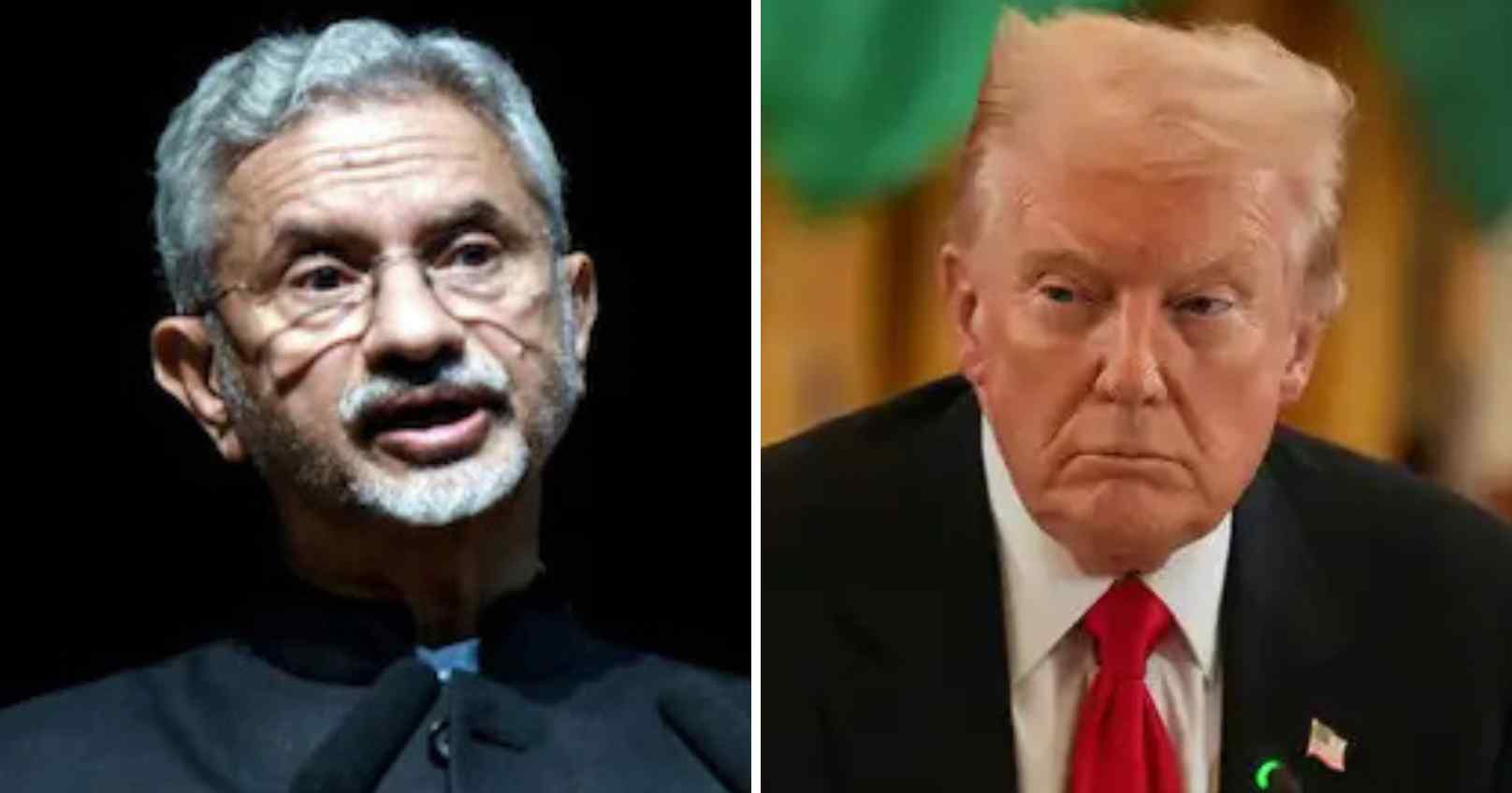
External Affairs Minister S. Jaishankar on Saturday said that global politics is increasingly overshadowing economics, and in such unpredictable times, India must consistently widen its pool of suppliers to ensure its strategic and commercial security.
Speaking at IIM-Calcutta after receiving an Honorary Doctorate, Jaishankar remarked that the United States has reshaped the way it conducts international relations, preferring direct bilateral engagements over traditional multilateral frameworks. He added that India has accelerated efforts toward self-reliance and is pushing to establish itself as a strong global manufacturing hub.
“This is a period where political considerations outweigh economic logic,” he said. “In a world full of uncertainties, expanding and diversifying supply lines becomes essential for safeguarding national interests.”
He pointed out that the US — formerly considered the stabilising force behind the modern economic order — is now redefining its approach by negotiating deals separately with each nation. India and the US currently have two independent tracks of negotiation: one aimed at resolving tariff-related issues and another exploring a broader trade agreement.
Jaishankar also observed that China has pursued its own strategies for years and continues to do so unabated. This, he said, has left many countries unsure whether they should focus on the visible rivalry playing out or on the behind-the-scenes compromises that come with it.
“With globalisation under stress, markets fragmenting, and supply networks facing disruptions, nations everywhere are preparing themselves for every possible scenario,” he added.
The minister said India is rapidly modernising its infrastructure and making significant scientific advancements. He noted that with China accounting for roughly one-third of global manufacturing, questions around the dependability and strength of supply chains have become more urgent, especially with conflicts and climate challenges increasing the risk of disruption.
According to him, India has been narrowing the infrastructure gap with leading Asian economies, citing progress across highways, airports, ports, rail networks, power systems and energy.
“We are progressing at a remarkable pace, and the world has begun to recognize the scale of India’s transformation,” he said.
Jaishankar added that India is working on new trade partnerships and connectivity corridors that align both with its strategic interests and its “people-first” economic vision.
Looking ahead to India’s goal of becoming a developed nation by 2047, he stressed that the country’s foreign policy must steadily broaden its reach and influence. India’s strong bonds with the Global South, he said, provide a solid foundation for this global expansion.
He further noted that a nation with major-power ambitions cannot rely on others for its industrial capabilities. Strengthening manufacturing, incentivising production and pushing the “Make in India” initiative reflect a stronger vision and heightened ambition, he said.
Jaishankar highlighted India’s growing focus on cutting-edge sectors such as semiconductors, electric mobility, batteries, drones, space technology, nanotechnology and biosciences. These fields, he said, give India the chance to leap ahead and build distinctive strengths.