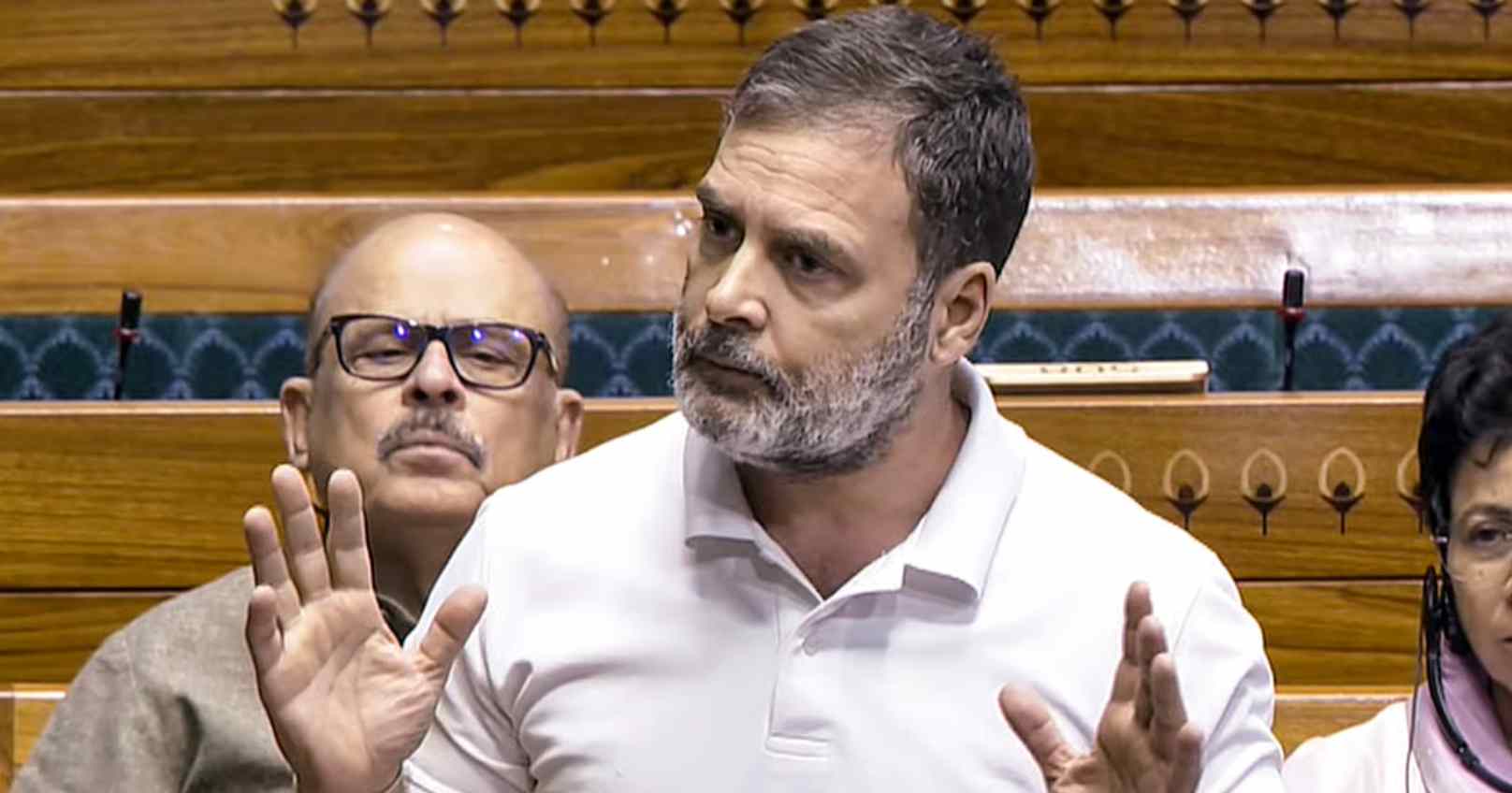
The Lok Sabha witnessed intense disorder on Tuesday after Leader of the Opposition Rahul Gandhi repeatedly attempted to quote an article based on an unreleased memoir by former Army chief M. M. Naravane during discussions on the Motion of Thanks to the President’s address.
The move sparked strong resistance from BJP lawmakers, while Congress members staged protests that escalated into physical disruptions, including climbing onto desks, ripping papers, and tossing them toward the Chair. The unrest forced multiple adjournments and disrupted parliamentary proceedings.
The situation worsened when Gandhi raised an issue that had already been ruled out by the Chair a day earlier. Presiding officer Krishna Prasad Tenneti urged him to stick to the President’s address and formally submit the document he wished to reference. Gandhi insisted the article was verified and linked to matters of national security, arguing that it was relevant to foreign policy and border concerns.
As BJP members objected, Parliamentary Affairs Minister Kiren Rijiju reminded the House that prior rulings could not be challenged and that all members must seek the Speaker’s consent before speaking. Gandhi countered by asserting his position as Leader of the Opposition and questioning why he was being restricted.
Tensions escalated when the Chair objected to the tone used by some members, following which Congress MPs intensified their protest. The dramatic scenes culminated in eight MPs being suspended for disorderly behaviour, which Tenneti described as crossing acceptable parliamentary limits.
Outside Parliament, Rahul Gandhi accused the government of deliberately silencing him and claimed he was denied his right to speak on the President’s address. He also linked the controversy to a recently concluded India–US trade agreement, alleging it would negatively impact Indian farmers and had been rushed under external pressure.
Meanwhile, Rijiju defended the Chair’s decision, stating that quoting an unpublished military memoir violated parliamentary norms and that Gandhi was attempting to force content that did not meet procedural standards.
The episode highlighted rising political tensions and added to ongoing debates over parliamentary conduct, free speech, and adherence to House rules.