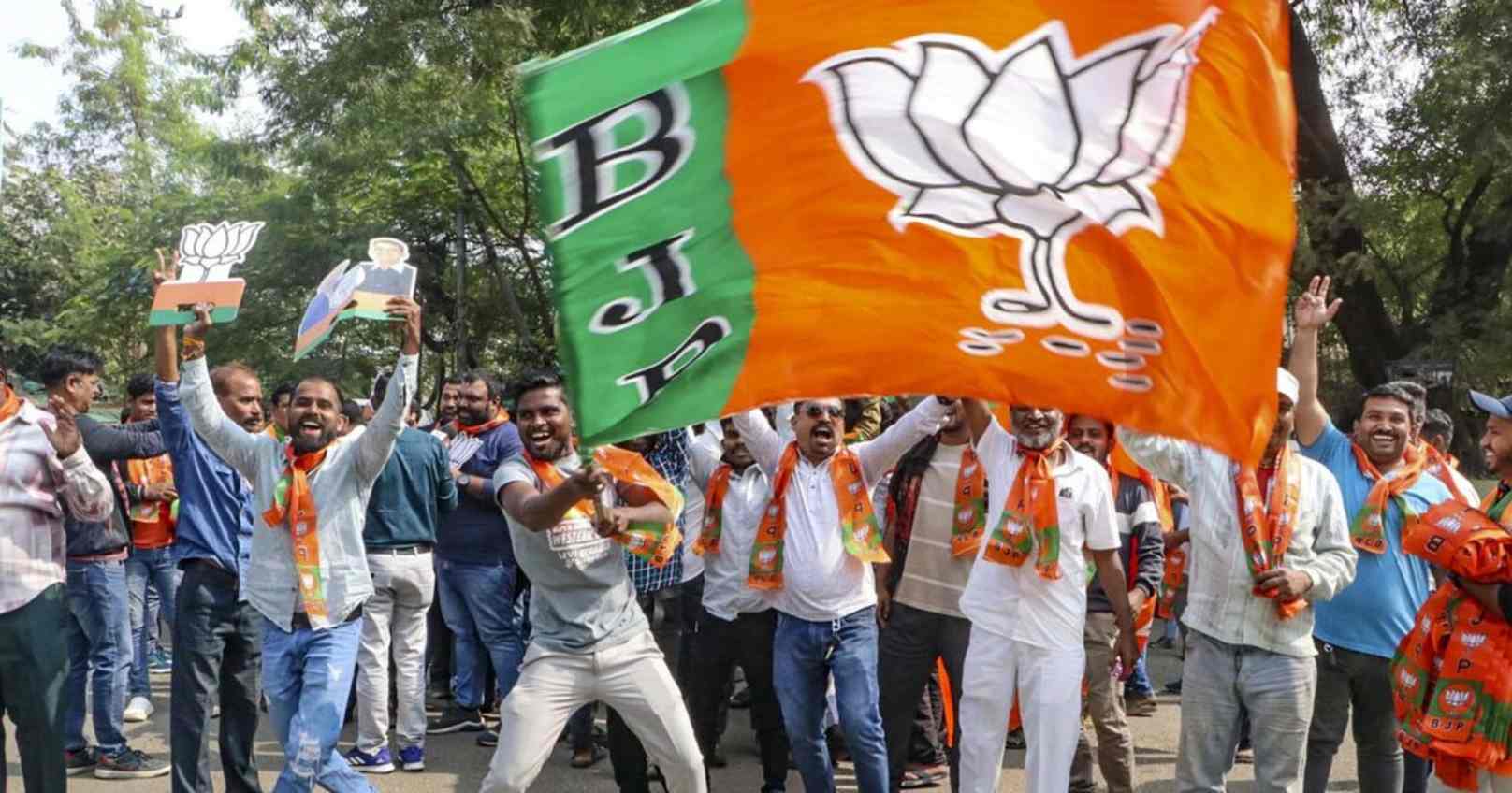
The Mahayuti coalition registered a resounding victory in Maharashtra’s municipal and nagar panchayat elections, firmly consolidating its hold on grassroots politics in the state. Out of the 288 Nagar Parishad and panchayat seats for which results have been announced, the Bharatiya Janata Party secured 129, making it the single biggest party in the contest.
The scale of the defeat prompted sharp reactions from the Opposition, with both the Congress and Shiv Sena (UBT) accepting the setback while simultaneously alleging institutional bias. Maharashtra Congress chief Harsh Vardhan Sapkal accused the Election Commission of aiding the ruling alliance and warned BJP’s partners, Eknath Shinde and Ajit Pawar, claiming the BJP would eventually sideline them.
Reacting to the outcome, Union Home Minister Amit Shah credited the victory to public endorsement of the NDA’s governance model at both the Centre and state levels, describing it as a mandate for inclusive development under Prime Minister Narendra Modi’s leadership.
Chief Minister Devendra Fadnavis said the BJP’s positive campaign strategy resonated with voters. Emphasising that he avoided personal attacks and focused solely on development plans, he said the results validated constructive politics.
Polling for 264 municipal councils and nagar panchayats—held after a gap of nearly ten years—took place on December 2, followed by elections in over 20 additional civic bodies on December 20. Vote counting began at 10 am on the day of results.
Despite expectations of a tough contest due to agrarian distress, farmer grievances and partial rollout of welfare schemes, the Opposition failed to translate discontent into votes. Shiv Sena (UBT) leader Ambadas Danve alleged that the Mahayuti’s success was driven by money and muscle power rather than public support.
In a brief statement laced with sarcasm, Sapkal “congratulated” the state Election Commission, reiterating claims that the electoral process favoured the ruling alliance.