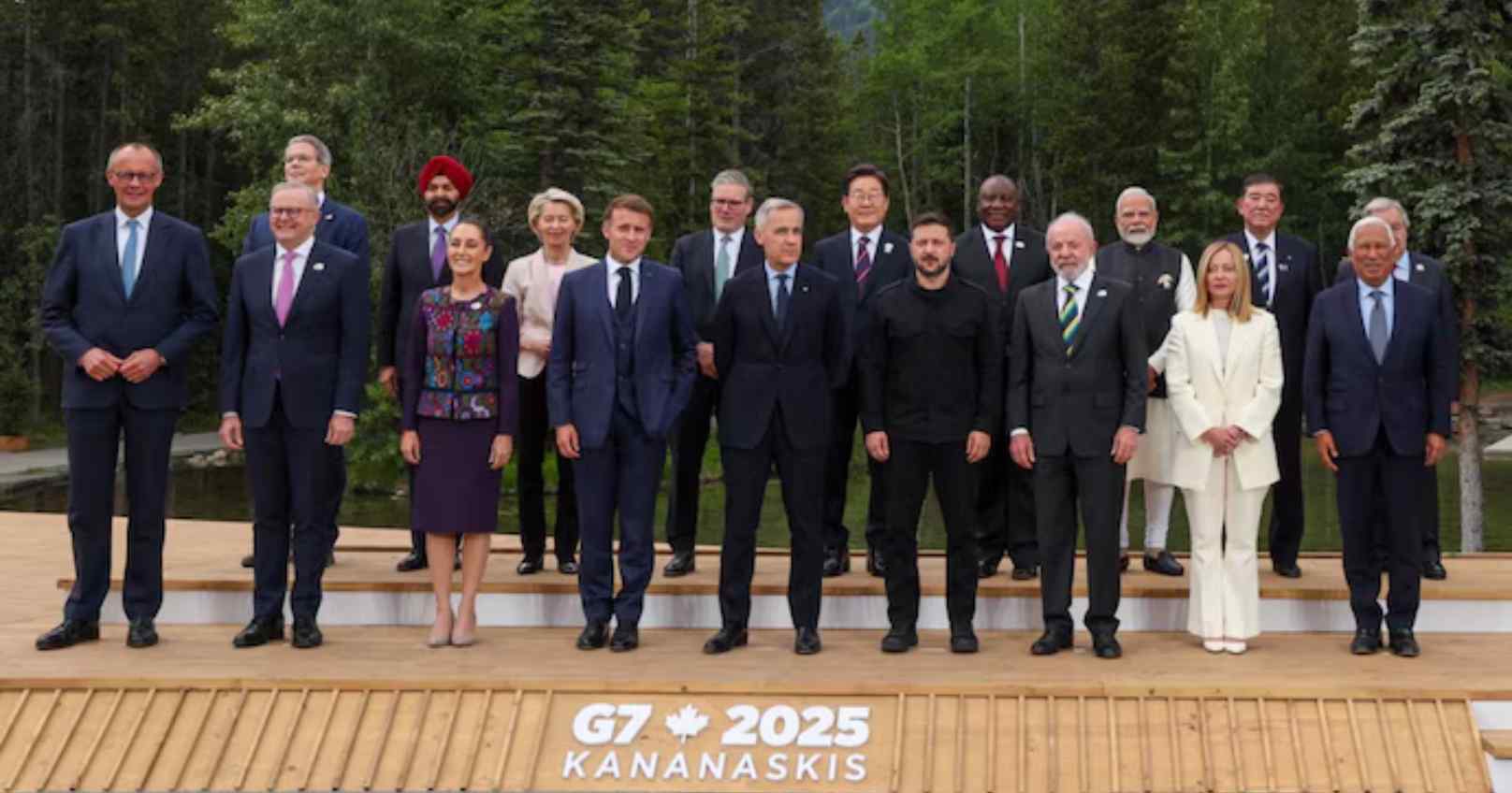
Prime Minister Narendra Modi, addressing global leaders at the G7 outreach session on energy security, made a strong call for united and decisive action against terrorism. Speaking in the wake of the April 22 Pahalgam attack, which he described as a blow to every Indian's identity and dignity, Modi warned that ignoring terrorism for political convenience amounts to betraying all of humanity.
“India’s own neighbourhood has turned into a hotspot for terrorism,” he said, in an apparent reference to Pakistan. “Countries that enable and promote terror must face consequences. There can be no leniency or double standards when dealing with this menace.”
Modi’s statement came as he appealed for greater international consensus on defining and confronting terrorism. He questioned whether nations are truly serious about ending terrorism or only act when affected directly. “Are we measuring the victims and perpetrators of terror on the same scale?” he asked. “What happens to the credibility of global institutions if we continue with this ambiguity?”
"Global Silence Fuels Terrorism"
Referring to the deadly Pahalgam attack, Modi said the brutal act wasn’t just a regional incident—it struck at the heart of India's values and global humanity. “It was not merely an assault on a location, but on the very soul of our nation,” he said, thanking countries that had condemned the incident.
He stressed that the global community must abandon selective outrage. “Some countries supporting terrorism are being rewarded while others imposing sanctions act only based on strategic interest,” Modi pointed out. “This contradiction must end.”
Call for Energy Security and AI Ethics
On energy issues, Modi stated that ensuring reliable energy access for future generations was both a challenge and an obligation. He said India’s energy policy rests on four core pillars—availability, accessibility, affordability, and acceptability—and called for inclusive growth driven by international cooperation.
Turning to technology, Modi acknowledged the rapid expansion of artificial intelligence as a transformative force but warned of its environmental cost and potential misuse. “AI is changing the world, but it is also energy-intensive,” he said. “We must ensure that data centers and tech-driven growth rely on renewable sources.”
Modi also flagged the rise of deepfakes as a pressing concern. “AI-generated content must be clearly marked. This is essential to avoid misinformation and social chaos,” he said.
He proposed international collaboration to manage AI risks while encouraging innovation, highlighting the need for resilient supply chains and fair access to critical technologies and minerals. “Supply chains must never be weaponised by any nation,” he added.
Finally, Modi reaffirmed India’s commitment to championing the Global South and promised to keep pushing its priorities on the world stage. “India will always work above self-interest when it comes to the well-being of humanity,” he said.