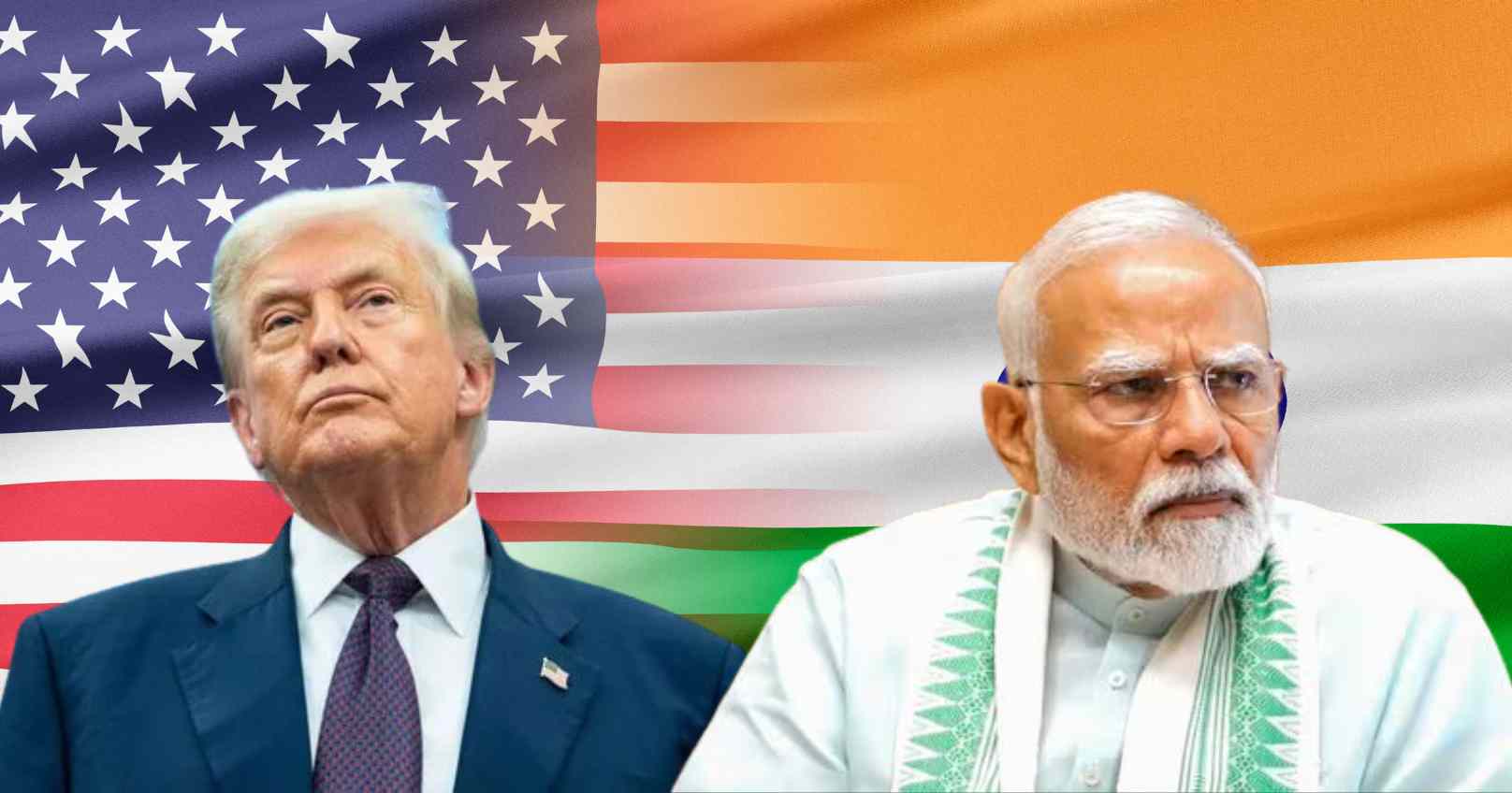
US President Donald Trump has once again taken aim at India, accusing New Delhi of creating a grossly unfair trade relationship while defending the heavy tariffs his administration recently imposed.
In a social media post on Monday, Trump alleged that India had for decades benefitted from an “imbalanced” arrangement, where it exported huge volumes of goods to the US but kept American products out with some of the steepest tariffs in the world.
“They sell us enormous quantities of goods, making us their biggest customer, but we sell them very little in return,” Trump claimed. “It has been a totally one-sided disaster.”
The Republican leader further said that India had now offered to bring its tariffs down to zero, but insisted the move had come “too late.” New Delhi, however, has repeatedly dismissed such assertions, maintaining that Trump’s remarks misrepresent the facts.
Tariffs and Russia Ties at the Forefront
Washington has slapped a 25% duty on Indian goods over what it calls a “sharp trade imbalance.” A second 25% levy was added after India refused US demands to halt oil imports from Russia, effectively doubling the tariff burden to 50%.
Reiterating his grievance, Trump wrote: “India buys most of its oil and defence supplies from Russia, very little from the United States.” India has firmly rejected pressure to end its Russian energy trade, saying purchases are guided by market conditions and national interests.
Backdrop of Global Diplomacy
Trump’s latest outburst coincided with Prime Minister Narendra Modi’s meeting with Russian President Vladimir Putin and Chinese Premier Xi Jinping at the Shanghai Cooperation Organisation (SCO) summit in China’s Xinjiang. The three leaders reaffirmed plans to strengthen strategic and economic cooperation in the face of shifting global challenges.
Critics have argued that Trump’s actions could accelerate closer coordination between India, Russia, and China. Analysts also note that his tariff decisions often appear to stem from personal grudges rather than coherent trade strategy. “He has a tendency to act on vendettas, grudges, and non-scientific thinking,” said US political analyst Rick Sanchez.
US investment bank Jefferies suggested that the tariffs partly reflected Trump’s frustration at being sidelined from India-Pakistan negotiations.
Mixed Signals from Washington
While Trump and his aides continue to criticise India, the US Embassy in New Delhi struck a far more conciliatory tone. Posting on X, the embassy praised the “enduring friendship” between the two countries and described India-US ties as “a defining partnership of the 21st century.”
The conflicting messaging underlined the uncertainty around Washington’s policy, with many observers calling the administration’s stance confused and contradictory.