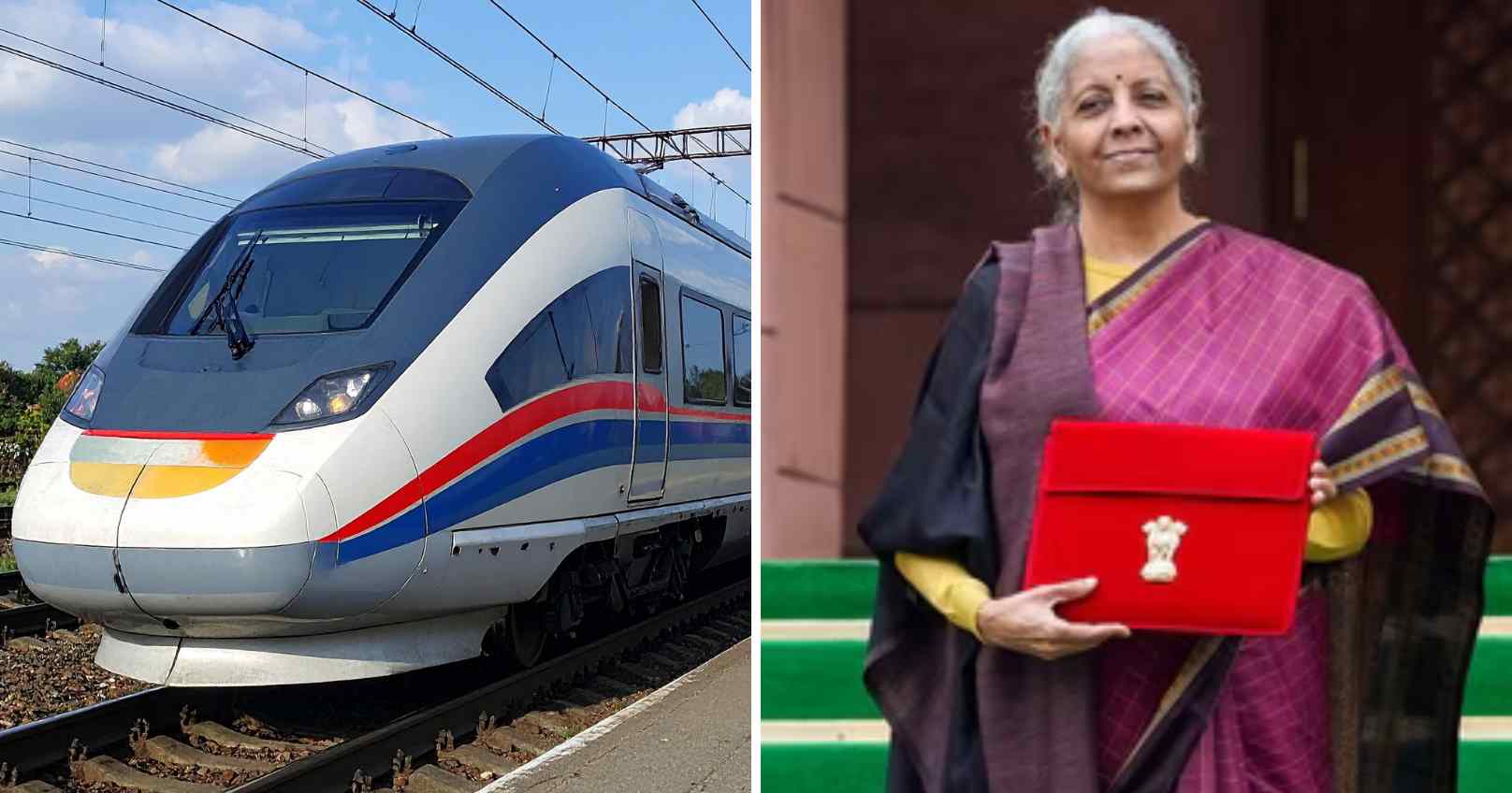
India is preparing for a major upgrade in passenger transport with the announcement of seven proposed high-speed rail corridors in the Union Budget 2026–27. Finance Minister Nirmala Sitharaman revealed the plan on Sunday, calling it a step toward faster, cleaner, and more efficient intercity travel.
The upcoming corridors are designed to link key financial, technological, industrial, and cultural regions, strengthening economic ties while reducing environmental impact. The planned high-speed routes include:
-
Mumbai–Pune
-
Pune–Hyderabad
-
Hyderabad–Bengaluru
-
Hyderabad–Chennai
-
Chennai–Bengaluru
-
Delhi–Varanasi
-
Varanasi–Siliguri
According to Sitharaman, these corridors will improve mobility between major growth hubs and emerging cities, supporting India’s transition to greener passenger transport systems.
Major Infrastructure Expansion Beyond Passenger Rail
Beyond high-speed trains, the Budget also prioritises freight and logistics upgrades. The Finance Minister announced a new East–West dedicated freight corridor that will connect Dankuni in West Bengal to Surat in Gujarat, strengthening long-distance cargo movement.
To further enhance multimodal logistics, the government plans to make 22 additional national waterways operational over the next five years. This initiative aims to lower transportation costs, ease pressure on roads and railways, and promote more sustainable cargo shipping.
The Budget also outlines plans to expand freight corridor networks and accelerate asset monetisation through Real Estate Investment Trusts (REITs), improving infrastructure efficiency and funding.
Eco-Tourism and Sustainable Travel Initiatives
The government is also investing in environmentally responsible tourism. Proposed initiatives include the development of eco-friendly trekking routes in Himachal Pradesh, Uttarakhand, Jammu and Kashmir, as well as the Araku and Pudigai Valleys.
Wildlife and nature-focused tourism will receive attention as well, with turtle-watching trails planned in Odisha, Karnataka, and Kerala, and bird-watching circuits around Pulicat Lake.
Aligned With India’s Long-Term Growth Vision
Sitharaman explained that the Budget is built around three key responsibilities — boosting economic growth, strengthening human capital, and ensuring inclusive progress. To achieve these goals, six targeted strategies will focus on expanding manufacturing, revitalising traditional industries, supporting MSMEs, improving infrastructure, enhancing economic resilience, and developing city-led economic regions.
By combining high-speed rail expansion, modern freight corridors, and sustainable tourism development, the government aims to create a more connected, environmentally responsible, and economically dynamic India.